


Property Investment Wind Turbine Integration: Renewable Energy Generation
If you're considering ways to boost your property's value and appeal, integrating wind turbines might offer more than just energy savings. As demand for sustainable solutions grows, you'll find government incentives, reduced energy costs, and a rising market of eco-conscious buyers to explore. But you might be wondering how these benefits stack up against installation challenges and the real economic impact—there's more beneath the surface that could shape your investment strategy.
Revenue Opportunities for Landowners
Landowners have the opportunity to integrate wind turbines into their properties, which can create a reliable source of revenue while maintaining the primary function of the land. Leasing land for wind or solar energy projects allows landowners to receive consistent lease payments while continuing agricultural operations.
Analyzing trends and reports from credible sources such as the Energy Association indicates that land values across the United States have shown stability, with some regions experiencing increases. Additionally, the electricity generated from these projects not only contributes to a new revenue stream for landowners but also enhances tax revenue for local developments.
To navigate the challenges and opportunities presented by renewable energy projects, landowners are encouraged to consult Hub databases, listen to relevant podcasts, and participate in events that provide global insights.
For more detailed information, it is advisable to reach out to management professionals who specialize in this sector.
Economic Impact on Local Communities
The integration of wind turbine projects into local communities can result in notable economic changes. Such projects typically lead to increased lease payments for landowners, enhanced property values, and an uptick in tax revenue, which can be allocated to support local schools and infrastructure improvements.
Data from the Energy Association indicates that renewable energy initiatives, including wind energy, generate employment opportunities, foster local development, and create reliable long-term revenue streams.
When comparing wind energy to other sources, such as natural gas or solar, it is important to acknowledge that each has its own set of challenges and advantages. For example, the consistency and predictability of wind patterns can impact energy production and planning efforts.
For private estate managers, understanding these potential economic impacts is essential for effectively addressing the needs of the community. For additional insights into community benefits associated with wind projects, interested parties are encouraged to consult our global database or reach out for further information.
Dual Land Use and Agricultural Advantages
The integration of wind turbines on agricultural land offers several advantages for both landowners and farmers. This approach allows for the continuation of primary agricultural activities while simultaneously contributing to renewable energy initiatives. Property owners can generate a stable income from lease agreements associated with wind projects.
Research and analyses conducted by the Energy Association in the United States indicate that property values in proximity to wind installations generally maintain stability or experience an increase. Additionally, the physical footprint of wind energy projects is relatively small, with up to 90% of the land remaining available for traditional farming activities, such as crop cultivation or livestock grazing.
Land managers also play a critical role in identifying both challenges and opportunities associated with dual land use. Their insights can assist stakeholders in effectively addressing local development needs while optimizing land resources.
For further information, including case studies and perspectives on this topic, please refer to our database or contact us directly.
Workforce Development and Employment Benefits
Investment in wind turbine projects plays a significant role in local workforce development and offers tangible employment benefits. Property owners and estate managers can observe that these wind energy initiatives create job opportunities during both the construction and operational phases, which can lead to increased work hours for local labor.
Furthermore, these projects can positively affect local economies by contributing to higher property values, generating additional tax revenue, and providing new income through lease agreements.
Training partnerships established within these projects are designed to equip workers with the necessary skills for careers in renewable energy, addressing both existing challenges and emerging opportunities within the workforce.
For empirical evidence and further insights, you may refer to our Reports, Podcasts, or Database for case analyses and various perspectives.
Should you wish to assess potential impacts or adapt strategies to better address local requirements, please feel free to reach out to us for further assistance.
Strategies for Community Engagement and Relationship Building
Property investors aiming to gain local support for wind turbine projects and ensure their long-term viability should adopt a comprehensive approach to community engagement. Effective relationship building with community leaders and residents extends beyond initial formal meetings. A commitment to ongoing communication is essential, which includes providing regular reports, maintaining transparent analyses of project developments, and hosting events for real-time updates.
It is advisable to establish agreements that clearly outline community benefits, lease payments, and revenue stream terms. In the United States, where property rights are highly valued, it is crucial to address potential impacts on landowners’ rights and concerns regarding property values. Moreover, emphasizing the potential for enhanced local tax revenues can be a compelling aspect of discussions with community stakeholders.
Implementing a structured approach, such as utilizing a centralized hub or database to track community feedback, can facilitate better communication and responsiveness. Additionally, reaching out to managers or engaging with energy associations can provide valuable insights into the challenges and opportunities associated with renewable energy development on a global scale.
This proactive and systematic approach will contribute to building trust and ensuring the successful integration of wind turbine projects within local communities.
Conclusion
By integrating wind turbines into your property investment strategy, you're positioning yourself at the forefront of sustainable development. You'll tap into new revenue streams, boost long-term property value, and contribute positively to your community. While challenges exist, advancements in technology and growing public support make renewable energy integration more accessible. Your proactive approach not only benefits you financially but also helps drive local economic growth and environmental stewardship—making it a smart move for today's property investors.
Share It!

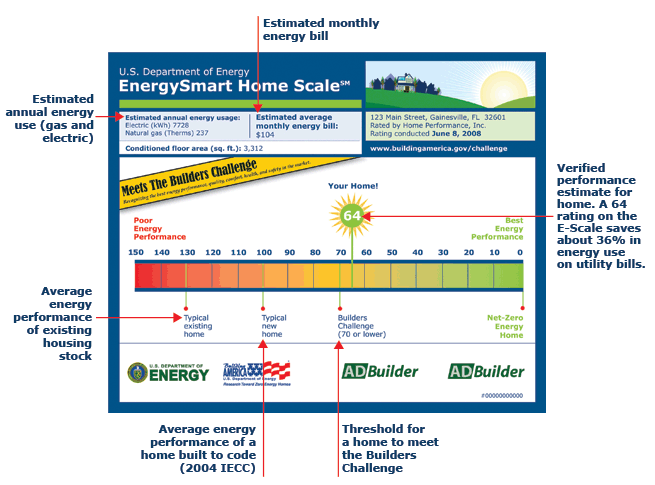
This allows homebuyers to see HOW the performance of a particular home compares to that of others.

Take a Course Online!
Testimonials
"The course was awesome!
I highly recommend it."
Lennea Aurilia
Stroudsburg, PA
"Educating the"chain"of professions in real estate
transactions is truly visionary."
Jan Pringle
Education Director
Kansas City
Regional Association of Realtors®
"Green Paradigm recommends
all real estate practitioners take
a course provided by
Green Real Estate Education."
Joseph Scarpa, LEED AP,
Good Green Tips
google ads
Latest News
- Mark Farrell
- Test
- New Team Members coming!
Popular
- Contact Us
- Become a Green Certified Real Estate Professional
- Greening Your Government Level One Green Leadership


